Stages of the Project
SOUNDSCALE is organised around three interconnected stages that bring together citizen participation, interdisciplinary research, public engagement, artistic inquiry, and policy dialogue. Rather than treating public participation as an afterthought, the project began by asking citizens what questions should shape the research and continues to build on those priorities throughout its activities. Their deliberations informed the interdisciplinary projects and continue to provide questions against which the project can examine its work.
Stage 1
The first stage of SOUNDSCALE focused on deliberation and citizen participation. Working alongside NatCen and Ipsos, we brought together 50 participants from Hampshire and London over a series of online and in-person workshops. Participants learned about DAS, questioned its purpose and possible applications, considered its potential benefits and harms, discussed local issues, and developed questions and priorities for the project’s research.
The panel highlighted concerns and possibilities relating to the environment, governance and costs, public health and community, surveillance and crime, and city infrastructure. Its deliberations informed the interdisciplinary workshop through which the project’s subsequent research areas were developed.
Stage 2
The second stage investigates questions and concerns raised through the Citizens’ Panel, while also developing new questions through technical, social, artistic, and policy research. Researchers across engineering, computer science, geography, the social sciences, arts, humanities, and policy are working together to explore the technical capabilities of DAS and the social, political, ethical, and environmental conditions through which it is developed and used.
This stage includes fieldwork on the National Dark Fibre Facility between Southampton and London, interdisciplinary research projects, artistic investigations, policy engagement, and community-based activities. It is also the stage in which many of the project’s public-facing activities take place, including workshops, exhibitions, artistic commissions, and the development of the SOUNDSCALE Digital Game. The combination of technical research with public participation, artistic practice, and policy dialogue helps us obtain a richer understanding of how emerging sensing technologies are developed, experienced, governed, imagined, and contested.

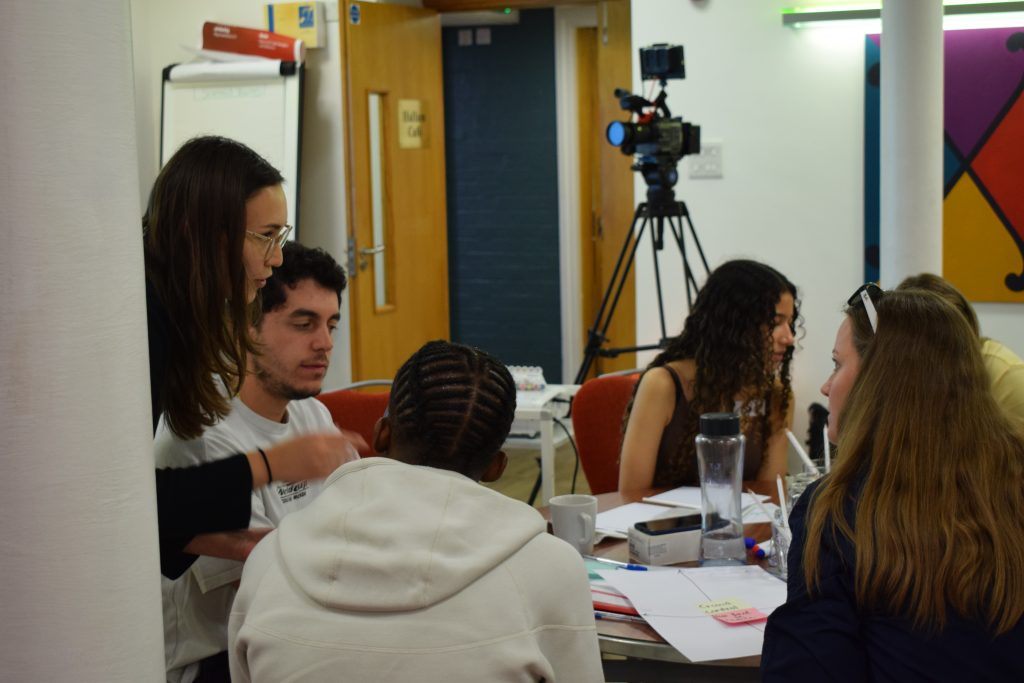
To carry the Citizens’ Panel discussions into the next stage of the project, we held a one-and-a-half-day interdisciplinary workshop in September 2025. It brought together 30 participants from the sciences, social sciences, arts, and humanities to explore possible research questions, methods, and approaches to responsible research. Participants worked in groups formed around themes from the Citizens’ Panel, using talks, discussion, science-fictional thinking, and an embodied walk to develop possible areas of research.
The workshop led to citizen-informed interdisciplinary subprojects, which explore different aspects of the technology through the technical, artistic, and social research described across the website.
Stage 3
The final stage brings together the project’s findings and shares them with citizens, researchers, policymakers, artists, and wider publics. This includes public events, exhibitions, policy engagement activities, publications, reports, and other project outputs.
The goal is to contribute to broader conversations about the responsible and democratic development and governance of sensing and other emerging technologies, and about the role of public participation, artistic inquiry, and interdisciplinary research within those processes.